AWC Advances Climate–Water Collaboration and Digital Innovation at COP30 in Belém, Brazil
The Asia Water Council (AWC) participated actively in the 30th UN Climate Change Conference (COP30), held from 10–21 November 2025 in Belém, Brazil. Bringing together delegates from 193 Parties, international organizations, NGOs, and industry leaders, COP30 welcomed over 60,000 participants to accelerate global climate action. This year’s negotiations centered on expanding climate finance, enhancing mitigation and adaptation implementation, reforming carbon market mechanisms, and promoting system-level transitions across energy, industry, and finance.
Against this global backdrop, AWC emphasized the indispensable role of water in climate resilience and showcased cutting-edge digital innovation and multi-stakeholder collaboration.

1
Strengthening UN Collaboration:
Progress Toward UNFCCC Observer Accreditation
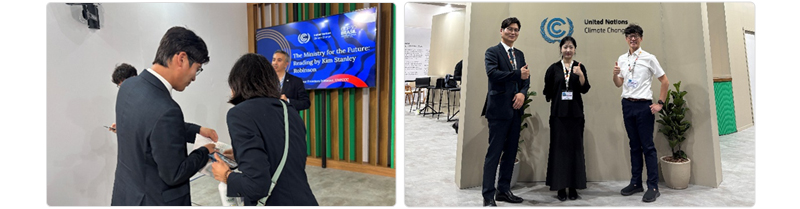
AWC held strategic consultations with the UNFCCC Secretariat regarding its pending application for accredited observer status, submitted in February 2024.
The Secretariat acknowledged AWC’s growing contribution to global water–climate cooperation and discussed the review timeline, including the possibility for AWC to participate under its own accreditation from COP31 in 2026.
Through this engagement, AWC reaffirmed its commitment to advancing integrated water–climate approaches within the UN framework and strengthening collaboration with global partners.
2
Korea Pavilion Side Event:
Catalyzing Cross-Sectoral Cooperation to Address the Climate Crisis
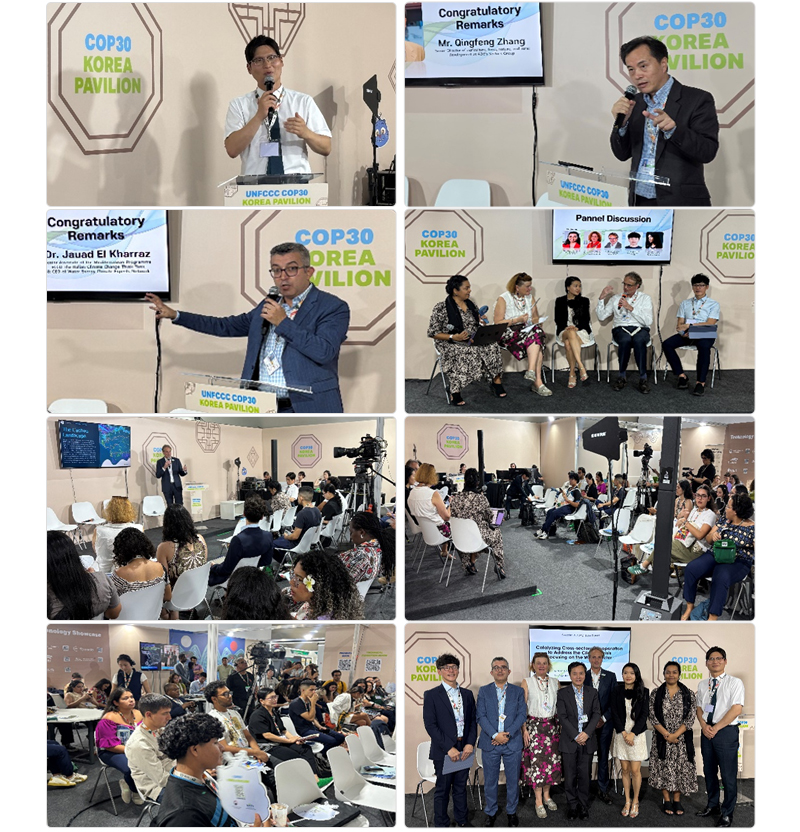
A key highlight of AWC’s participation at COP30 was the AWC–K-water co-hosted side event, held at the Korea Pavilion (Blue Zone, PV-A13) under the theme: “Catalyzing Cross-sectoral Cooperation to Address the Climate Crisis – Focusing on the Water Sector” on 18th November 2025.
The session gathered leading institutions—including ADB, OECD, Wetlands International, ECCO, WECEN, and MoA—to explore innovative pathways for strengthening climate-resilient water management. The discussion emphasized digital transformation, climate finance, and integrated governance as essential drivers of future adaptation.
Key Highlights of the Side Event
■ Opening & Congratulatory Remarks
Mr. Jaejin Han, General Manager, K-water / Executive Director, AWC, opened the session by highlighting the urgency of cross-sectoral cooperation in addressing escalating climate challenges.
Mr. Qingfeng Zhang, Senior Sector Director, ADB, stressed the urgency of addressing Asia’s “triple water crisis” of floods, droughts, and sea-level rise, reaffirming ADB’s commitment to mobilizing USD 100 billion in climate finance by 2030. He also highlighted opportunities for twinning programs with K-water and AWC for facility diagnostics and capacity development.
ECCO and WECEN emphasized nexus approaches that integrate water, energy, ecosystems, and climate, underscoring the importance of data sharing, institutional coordination, and inclusive participation of youth and women.
■ Expert Presentations
Dr. Mathilde Mesnard, Deputy Director, OECD Environment Directorate, identified the persistent global underinvestment in water security—particularly in Asia—where the cost–risk gap remains the largest. She called for efficient financing mechanisms and policy innovation to match accelerating climate risks.
Dr. Coenraad Krijger, CEO, Wetlands International, introduced the Wetlands Atlas, which integrates satellite data and community-based approaches to map priority restoration and protection zones.
Mr. Minseok Choi, Senior Manager, K-water, presented advanced digital water technologies—including AI-based analytics, digital twin water systems, smart monitoring, and renewable energy integration—as essential tools for climate-resilient infrastructure and carbon neutrality.
Ms. Charlotte Qin, Executive Director, Meeting of Waters (MoW), demonstrated how art, technology, and community engagement can amplify awareness of climate and water challenges, showcasing global initiatives such as the AI-based platform NOEA.
■ Panel Discussion
Panelists highlighted:
the transformative potential of AI, IoT, and big data in strengthening disaster forecasting and water security;
the role of nature-based solutions and community-driven projects in accelerating local adaptation;
the need for phased digital transition strategies to support developing countries;
and the value of cross-sector collaboration—including technical, ecological, financial, and creative domains—to tackle complex climate-driven water challenges.
3
Outcomes and Significance
■ Advancing Digital Water Solutions for Climate Adaptation
The event underscored the growing importance of digital innovation—AI water treatment, digital twins, smart monitoring—in responding to intensifying climate risks.
■ Expanding Climate Finance Pathways
Through dialogue with ADB, OECD, and partners, AWC strengthened pathways to mobilize climate finance and enhance the sustainability of water adaptation projects.
■ Enhancing Global Water–Climate Governance Networks
By convening development banks, think tanks, NGOs, and technology experts, AWC solidified its position as a regional hub for water–climate cooperation and strengthened partnerships ahead of COP31
Positioning Asia’s Water Agenda on the Global Climate Stage
AWC’s participation at COP30 marks another milestone in its mission to elevate Asia’s water issues and strengthen integration between water management and global climate action. As countries announced more ambitious commitments—including Korea’s 2035 NDC and accession to the Powering Past Coal Alliance—the need for resilient, innovative water solutions has become even more urgent.
tGuided by the principle that “Water is at the heart of climate action,” AWC will continue advancing digital innovation, integrated governance, and multi-stakeholder collaboration—carrying this momentum into COP31 and beyond.